At 40, I had more potential. At 66, I have more capability.
matters less than what you have learned to make possible.
Conventional wisdom says that our abilities decline as we age.
Physically, some things undoubtedly do.
At 40, my body had more strength, speed and recovery capacity than it has today.
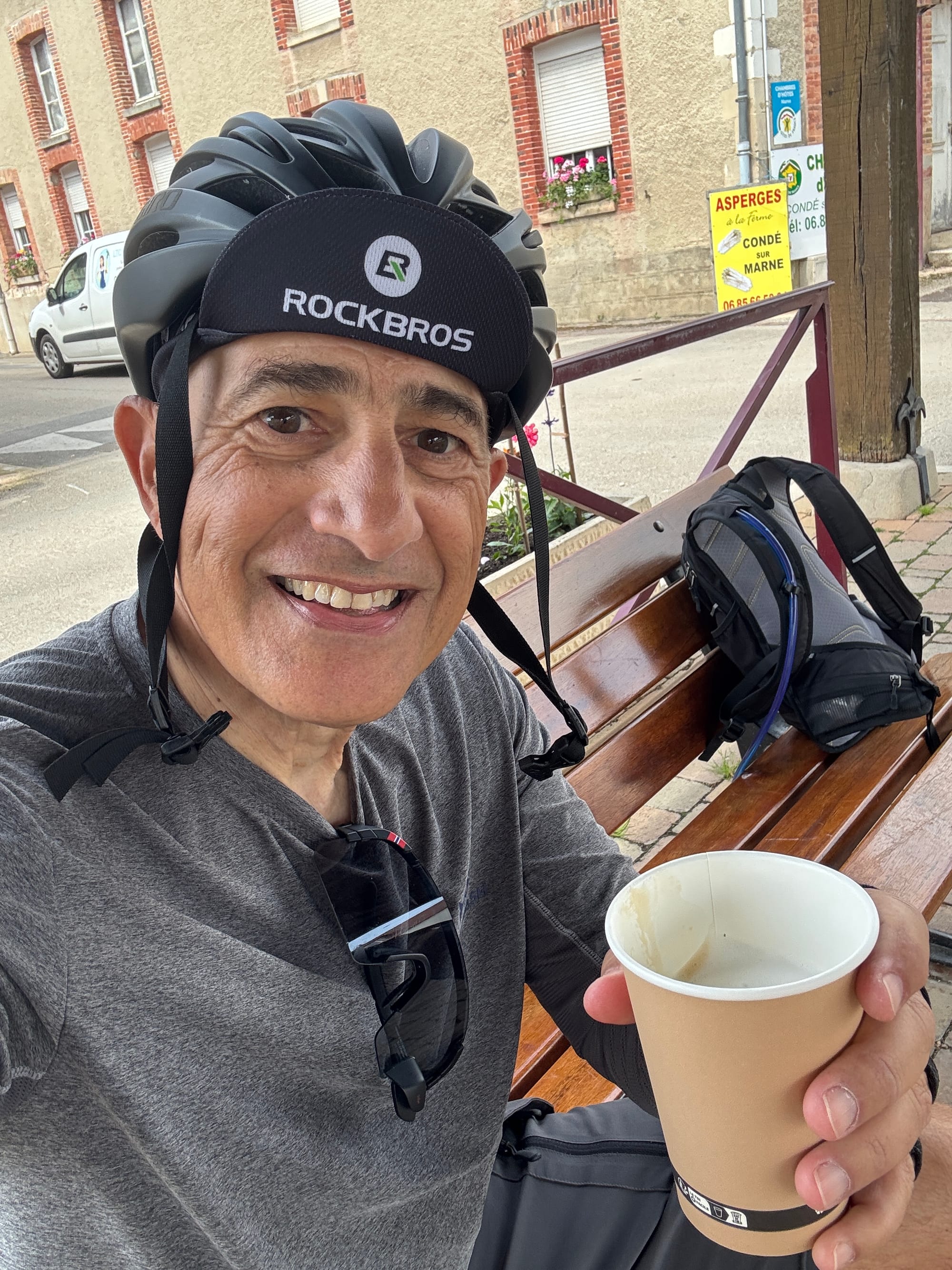
Yet I could not have walked 6,000 kilometres across Europe then. I could not have cycled 3,200 kilometres around France either.
Not because those challenges were beyond my physical potential... but because I had never converted that potential into something I could actually use.
At 40, I wasn’t as fit. I knew less about my body, less about discomfort and less about what allowed me to keep going when motivation disappeared.
I had more potential.
At 66, I have more capability.
The assumption worth questioning
We tend to think of age as a steady reduction in what we can do.
Our physical ceiling may indeed become lower. But our ceiling is not the same as our actual capability.
Potential is what might be possible under ideal conditions.
Capability is what you can reliably put to work in the real world.
It includes fitness and skill, but also experience, judgment, self-knowledge, preparation and the ability to remain effective when reality refuses to follow the plan.
At 40, the gap between my potential and what I could actually do was wide.
Today, my physical potential may be lower but I use more of it.
An ageing body can lose potential while the person living inside it continues gaining capability.
The perspective shift
We cannot stop every form of decline.
But decline in one dimension does not mean decline in all dimensions.
Experience can improve judgment. Practice can improve efficiency. Greater self-knowledge can help us use our energy more intelligently. Previous discomfort can make the next difficult moment less intimidating.
The question is therefore not only:
What have I lost with age?
It is also:
What have I finally learned to use?
The abilities available to you today may be different from those you had ten or twenty years ago.
Different does not necessarily mean less useful.
Look again
This is not an argument that age is “just a number.”
Bodies change. Recovery slows. Illness, injury and individual circumstances create genuine constraints. Positive thinking does not remove them.
Nor can capability grow indefinitely in every area.
But treating decline as the whole story creates another limitation: it encourages us to compare ourselves with a theoretical younger version rather than develop the person we are now.
Perhaps your greatest opportunity is not recovering all the potential you once had.
Perhaps it is converting more of the potential you still have.
A note from the road
The Tour de Gaule did not prove that I am physically stronger than I was at 40.
I’m not.
It showed me that unused potential is not the advantage we imagine it to be.
Potential describes what could exist.
Capability changes what you can actually do.
Walk your talk,
Franck
P.S.:
- What can you do now that your younger self had the potential—but not yet the capability—to do? Reply and tell me. I read every response.
- If someone else needs this perspective, forward it to them. They can join WTFT here.
- WTFT is free for everyone. If you would like to support the experiments behind it, you can leave a tip
New possibilities delivered to your mail
Free. Only when I have something worthy to share. Unsubscribe anytime.

Member discussion