“I could never do that.”
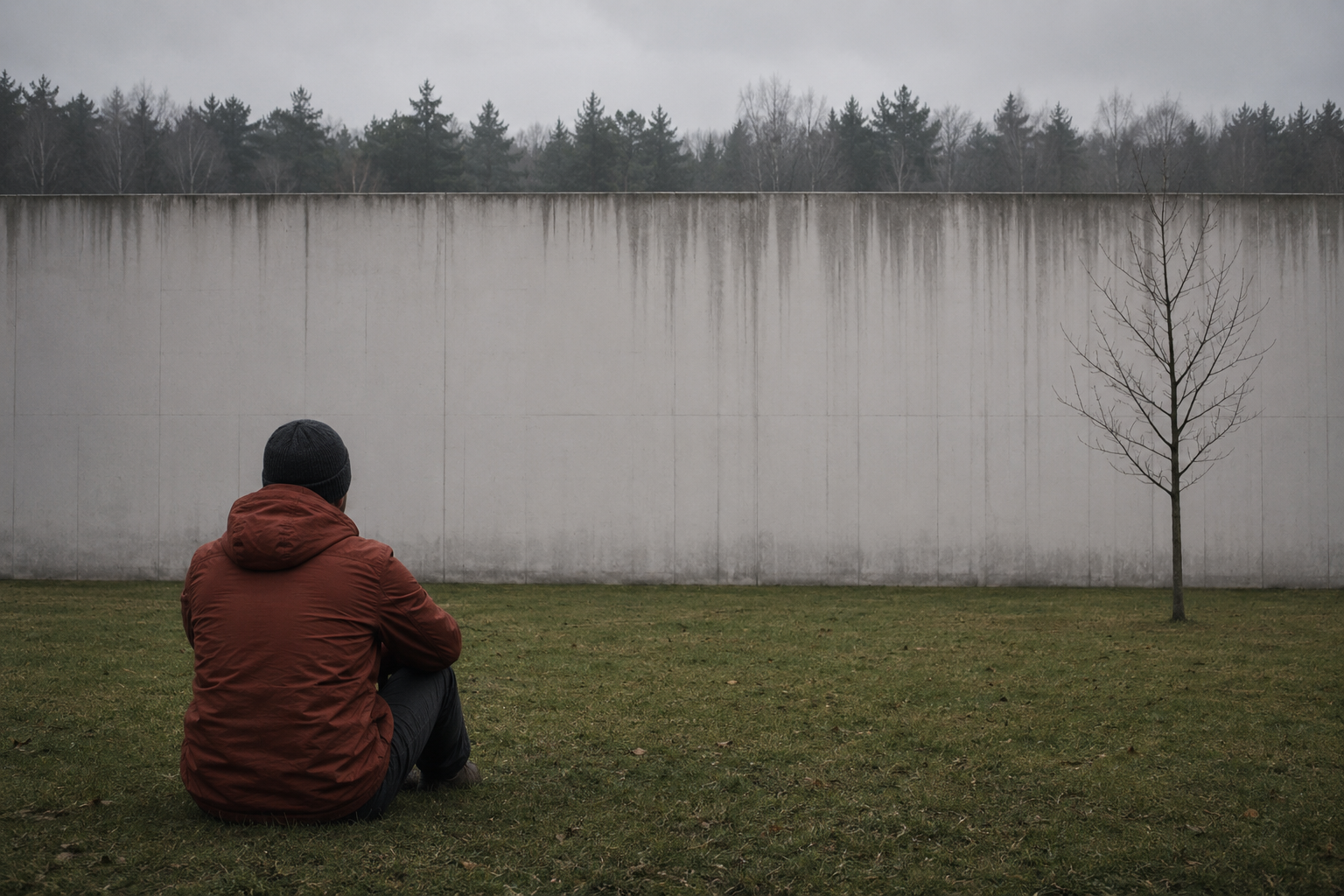
People often said this when they learned I was walking 6,000 kilometres across Europe.
I understood why.
They were imagining the entire journey at once: eleven months, nine countries, winter, fatigue, injuries, uncertainty and thousands of kilometres still ahead.
Seen that way, it felt impossible.
But 6,000 kilometres was never my daily task.
Each morning, I only had to reach my next accommodation, usually 25 kilometres away.
Some stages were difficult. A few pushed me close to my limits. But all were possible.
Then I would eat, recover, sleep and do it again.
The 6,000 kilometres gave me a direction. They were never my daily task.
The assumption worth questioning
We often assume that before beginning an ambitious undertaking, we must believe we are capable of completing it.
So we compare who we are today with the full size of the eventual outcome.
Could I build that business?
Could I change careers?
Could I become financially independent?
Could I regain my health?
Could I walk 6,000 kilometres?
Of course we feel incapable.
We are asking today’s version of ourselves to perform months or years of work all at once.
The Perspective Shift
We confuse the size of the outcome with the size of the action required today.
An outcome can feel impossible even when the next meaningful stage is entirely possible.
I did not need proof that I could reach Tarifa before leaving Tallinn.
I needed a first stage within my capabilities, and a plan that gave me a reasonable chance of getting up and walking again the following morning.
The journey became possible not because the destination moved closer, but because the task changed:
Not:
Can I walk 6,000 kilometres?
But:
Can I complete today’s stage and preserve enough capacity to continue tomorrow?
Look again
Breaking an objective into stages does not guarantee success.
A series of possible actions can still fail because of poor planning, insufficient resources, changing circumstances, injury or bad luck.
But “impossible” is often not a conclusion based on evidence.
It is the feeling produced when we compress an entire journey into one imaginary act.
A note from the road
When people look at the photograph of me arriving in Tarifa, they see 6,000 kilometres.
I see instead hundreds of ordinary mornings.
Put on the backpack.
Check the route.
Reach the next destination.
Recover.
Repeat.
The apparently impossible outcome was not produced by impossible actions.
It was built from possible days that could be repeated.
Walk your talk,
Franck
P.S.:
- What have you dismissed because the complete outcome feels impossible? Reply and tell me. I read every response.
- If someone else needs this perspective, forward it to them. They can join WTFT here.
- WTFT is free for everyone. If you would like to support the experiments behind it, you can buy me a coffee.
New possibilities delivered to your mail
Free. Only when I have something worthy to share. Unsubscribe anytime.

Member discussion