If ordering food takes you forever, pay attention.
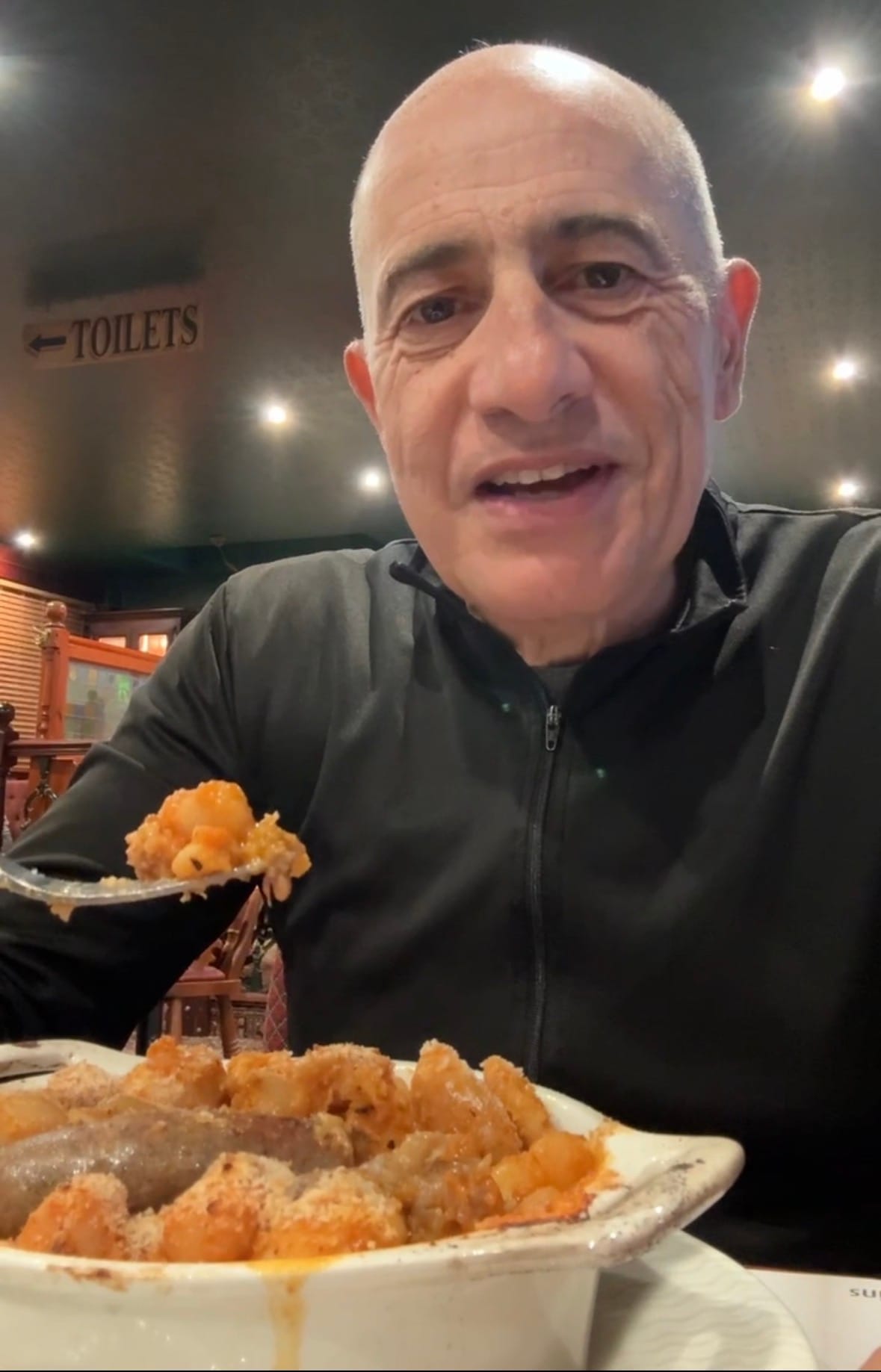
Food was an integral part of my cycling experiment around France.
In every village and city I stayed at, I made a point of trying their regional speciality. Some I knew, some I had never tasted, and often I had to choose from menus full of unfamiliar options.
Ordering should have been the easy part.
But it made me notice how differently people make even the smallest decisions.
Some choose immediately.
Some use price as a clear filter.
Some order what they already know they enjoy.
No friction. Decision made.
Others scan the menu repeatedly, worried that something better may be hiding elsewhere.
They ask what everyone else is having.
They finally choose and then reconsider as soon as somebody orders something different.
If you recognise yourself, pay attention.
It may not be about food.
The assumption worth questioning
We assume that the way we handle insignificant choices says little about how we approach important ones.
Surely, when the stakes are higher, we become more deliberate and decisive.
But why would we?
The same mind is making the decision.
The same discomfort with uncertainty remains.
The same fear of missing out, need for reassurance and reluctance to close other options are still present.
The Perspective Shift
Small decisions can expose the patterns we carry into larger ones.
If you fear missing a better dish, seek reassurance from everyone else or reopen your choice after making it, the consequences are insignificant.
But the pattern may not remain insignificant.
When the decision concerns your career, money, health or relationship, the same fear of choosing wrongly can turn uncertainty into paralysis.
Higher stakes do not necessarily make us better decision-makers.
They amplify the way we already decide.
Look again
Taking time is not necessarily indecision.
The options may genuinely matter, or you may simply enjoy exploring them.
The warning sign is not time.
It is repetition: revisiting the same options without gaining information that could change your choice.
What could this change for you?
Think about a decision you are struggling to close. Perhaps it concerns your career, money, health or relationship.
Now compare it with the way you make an ordinary choice.
Do you recognise the same pattern?
Maybe your important decision does not need another round of analysis.
Maybe it needs a clearer criterion, permission to accept “good enough,” or a rule that tells you when the search is over.
A note from the road
The Tour de Gaule introduced me to andouille in Vire, teurgoule in Cabourg, tielle in Sète, and specialities I did not know well.
Some choices were excellent. Others were merely interesting.
None had to be perfect to make the experience worthwhile.
Perhaps that is another useful reminder:
A choice does not need to be the best imaginable choice to be worth making.
Walk your talk,
Franck
P.S.:
- What do you notice about the way you make small decisions? Reply and tell me. I read every response.
- If someone else needs this perspective, forward it to them. They can join WTFT here.
- WTFT is free for everyone. If you would like to support the experiments behind it, you can buy me a coffee.
New possibilities delivered to your mail
Free. Only when I have something worthy to share. Unsubscribe anytime.

Member discussion