My hotel no longer existed
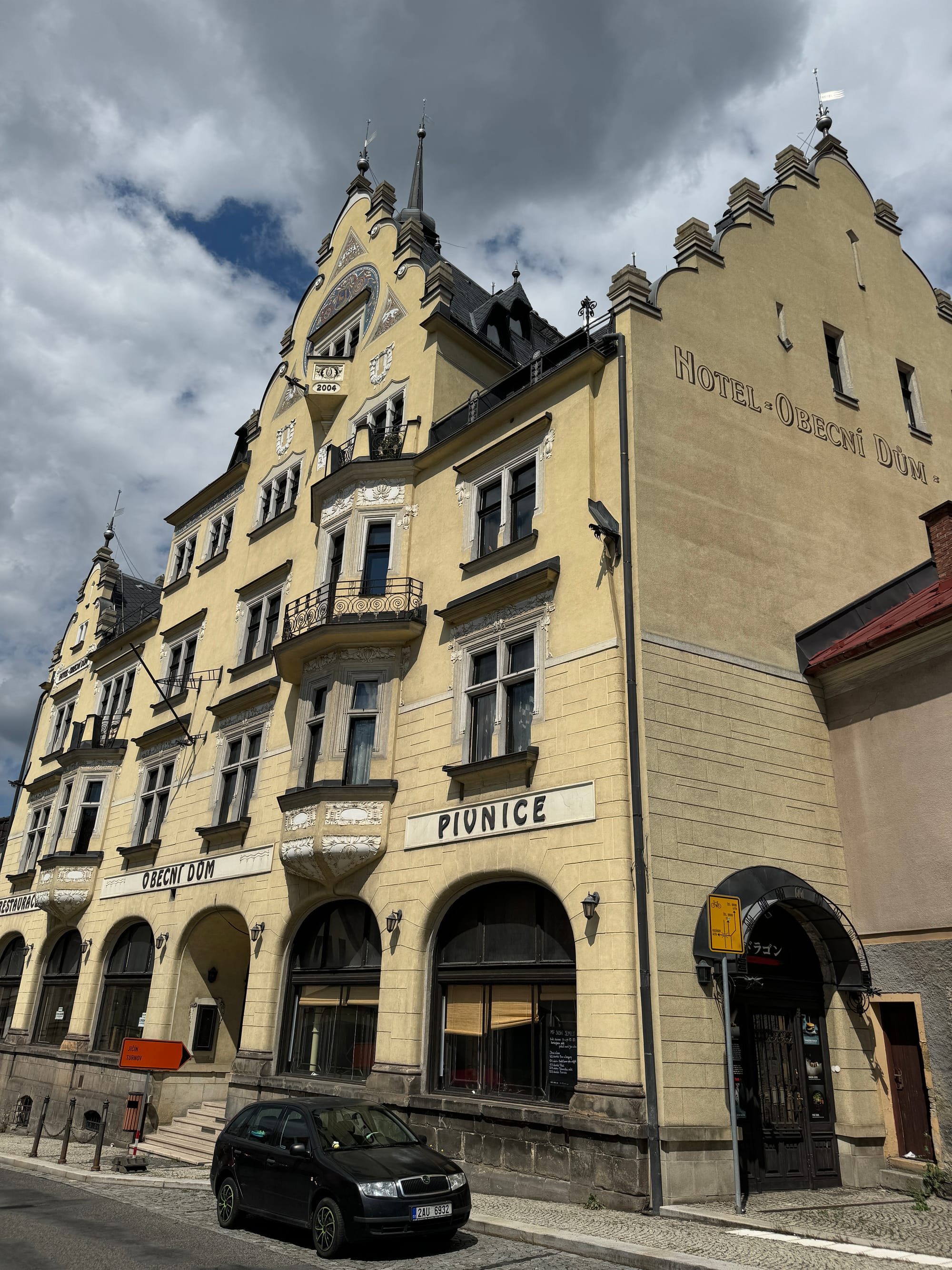
On stage 78 of my walk across Europe, I arrived in Semily, Czechia, after a long day on the road.
I had booked and paid for a hotel room weeks earlier. At around 5 p.m., I reached the majestic building wanting little more than a shower and a bed.
The doors were locked. There was no sign of life, and nobody answered the reception phone.
Eventually, some construction workers emerged. They spoke no English, but I managed to understand that the hotel had closed and was being converted into apartments.
I showed them my confirmed reservation.
They called their manager, who agreed to let me stay in a room that had not yet been gutted.
It was dirty and had no bedsheets. But I was not sleeping outside.
That night, alone in what felt like an abandoned haunted manor, I kept wondering:
What had gone wrong?
What should I have checked?
What could I have done differently?
Something had clearly gone wrong.
But that did not mean I had done something wrong.
Why was my mind so determined to find a mistake?
Perhaps because blaming myself offered a reassuring explanation. If I had forgotten to check something, I could check it next time. If I had made a mistake, I could correct it. The world would remain predictable and the outcome controllable.
The alternative was more unsettling: I had made a reasonable decision with the information available and it had still produced a bad outcome.
Of course, hindsight can always identify one more precaution. I could have called the hotel the previous day. I could have reconfirmed a reservation that had already been confirmed.
But how many confirmed arrangements should we reconfirm? At some point, reasonable preparation ends and uncertainty begins.
Not every bad outcome contains a lesson about what we should have done differently. Sometimes the lesson is simply that our control has limits.
The Perspective Shift
Learn from genuine mistakes. But before blaming yourself, ask: was there information I could reasonably have known and acted on at the time or am I using hindsight to make an uncontrollable outcome feel preventable?
The hotel had closed. I had prepared reasonably. There was no useful mistake to correct.
I could not change what had happened. I could still decide what happened next.
There was a night to get through and another stage to walk the following morning.
Walk your talk,
Franck
P.S.:
- Have you ever blamed yourself for something that was never within your control? Reply and tell me. I read every response.
- If you know someone who might find this perspective useful, forward the post to them. They can subscribe here.
- WTFT is free for everyone. If something I share gives you a useful perspective, a coffee helps me keep WTFT moving.
New possibilities delivered to your mail
Free. Only when I have something worthy to share. Unsubscribe anytime.

Member discussion