Why do I keep reopening a decision I’ve already made?
Sometimes it is what keeps you stuck.
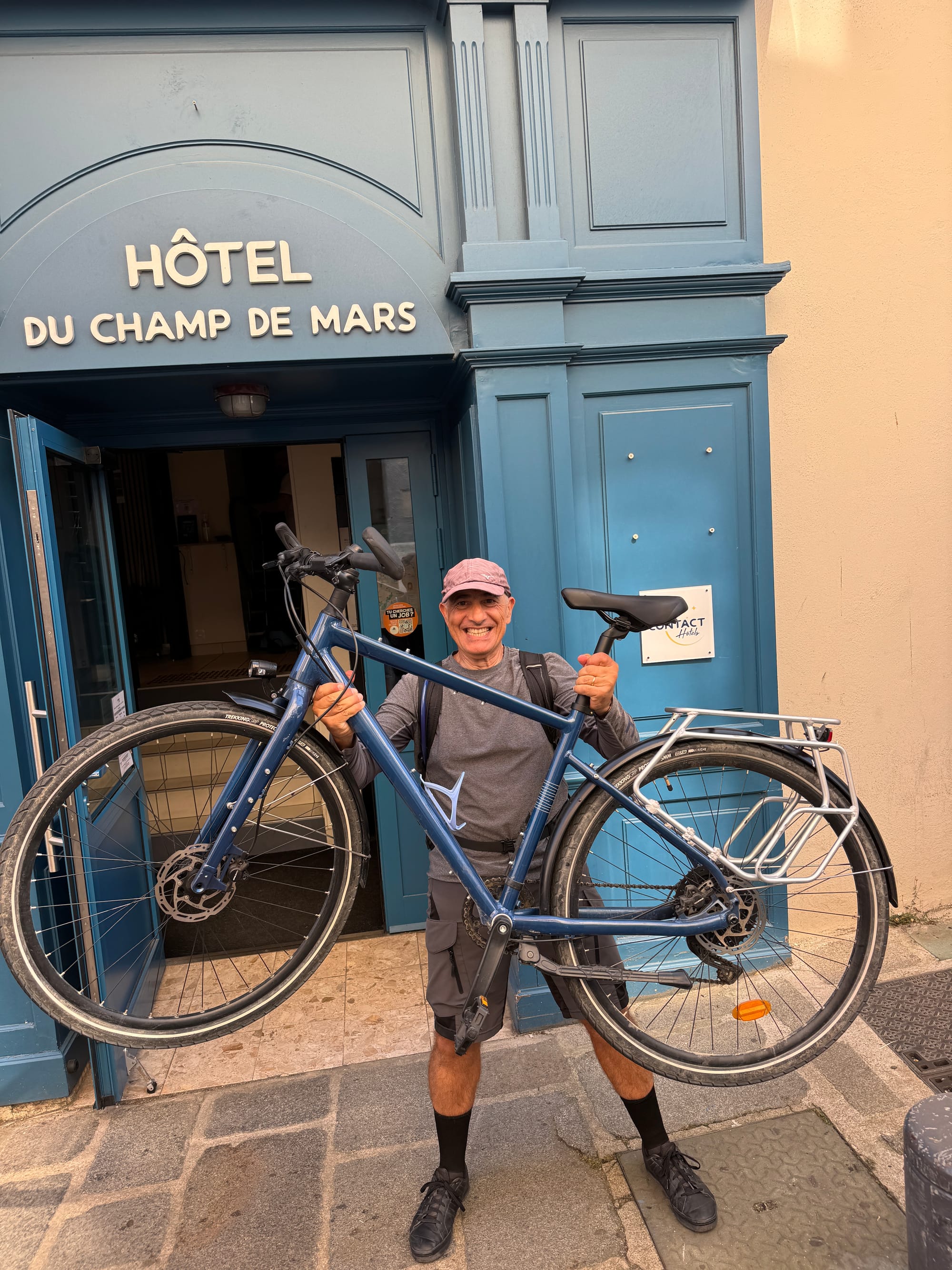
When I finished cycling 3,200 kilometres around France, people congratulated me for reaching the end.
But finishing wasn’t the hardest part.
Starting was.
Perhaps you know the feeling. You haven’t rejected an option, but you haven’t chosen it either. Leaving it open means facing the same decision again tomorrow.
Before I left, the entire journey existed in my head at once: the distance, the time, the physical effort, everything that could go wrong and the possibility that I might not finish.
I could leave later. Change the route. Shorten the ride. Wait for better conditions. Reconsider the whole idea.
Keeping every option open felt like freedom.
In reality, it kept the decision alive.
Once I committed, the 3,200 kilometres did not become easier. But the question changed.
I no longer woke up asking, “Should I really do this?”
Only: “What do I need to do today?”
Most days, the answer was wonderfully ordinary: get on the bike, pedal to the next destination, eat, recover and repeat.
The effort remained. The debate disappeared.
The assumption worth questioning
We associate freedom with keeping our options open. The more choices we preserve, the freer we imagine ourselves to be.
Sometimes that is true. But an option is not free simply because we haven’t chosen it.
It continues to demand attention. Every time the chosen path becomes uncomfortable, the unchosen option invites us to reopen the decision.
At some point, keeping an option open can consume more freedom than closing it.
Commitment does more than restrict choice. It can remove a recurring decision, allowing your energy to move from whether to how.
Perhaps you don’t need more motivation or information.
Perhaps you are exhausted from renegotiating the same decision every morning.
Look again
Commitment is not the same as rigidity. A decision should simplify action without making new evidence invisible.
Reconsidering because today feels uncomfortable is different from reconsidering because reality has materially changed.
Walking the talk does not mean continuing blindly. It means owning your choice while remaining honest about what reality reveals.
What could this change for you?
Think of one decision you keep reopening.
Not one for which you genuinely need more information. One you have examined repeatedly without discovering anything substantially new.
What is the cost of keeping it open in attention, momentum or peace of mind?
Is the open option protecting your freedom or consuming it?
A note from the road
When I started the ride, I had no proof that I would finish.
I only knew that I had stopped deciding whether to start.
That one decision made thousands of smaller actions possible.
The decision you are postponing may not work out. But leaving it permanently open is also a choice with costs of its own.
Indecision is not neutral.
Walk your talk,
Franck
P.S.:
- What decision do you keep renegotiating? Reply and tell me. I read every response.
- If someone else needs this perspective, forward it to them. They can join WTFT here.
- WTFT is free for everyone. If you would like to support the experiments behind it, you can leave a tip
New possibilities delivered to your mail
Free. Only when I have something worthy to share. Unsubscribe anytime.

Member discussion