Will I still be able to enjoy the retirement I’m saving for?
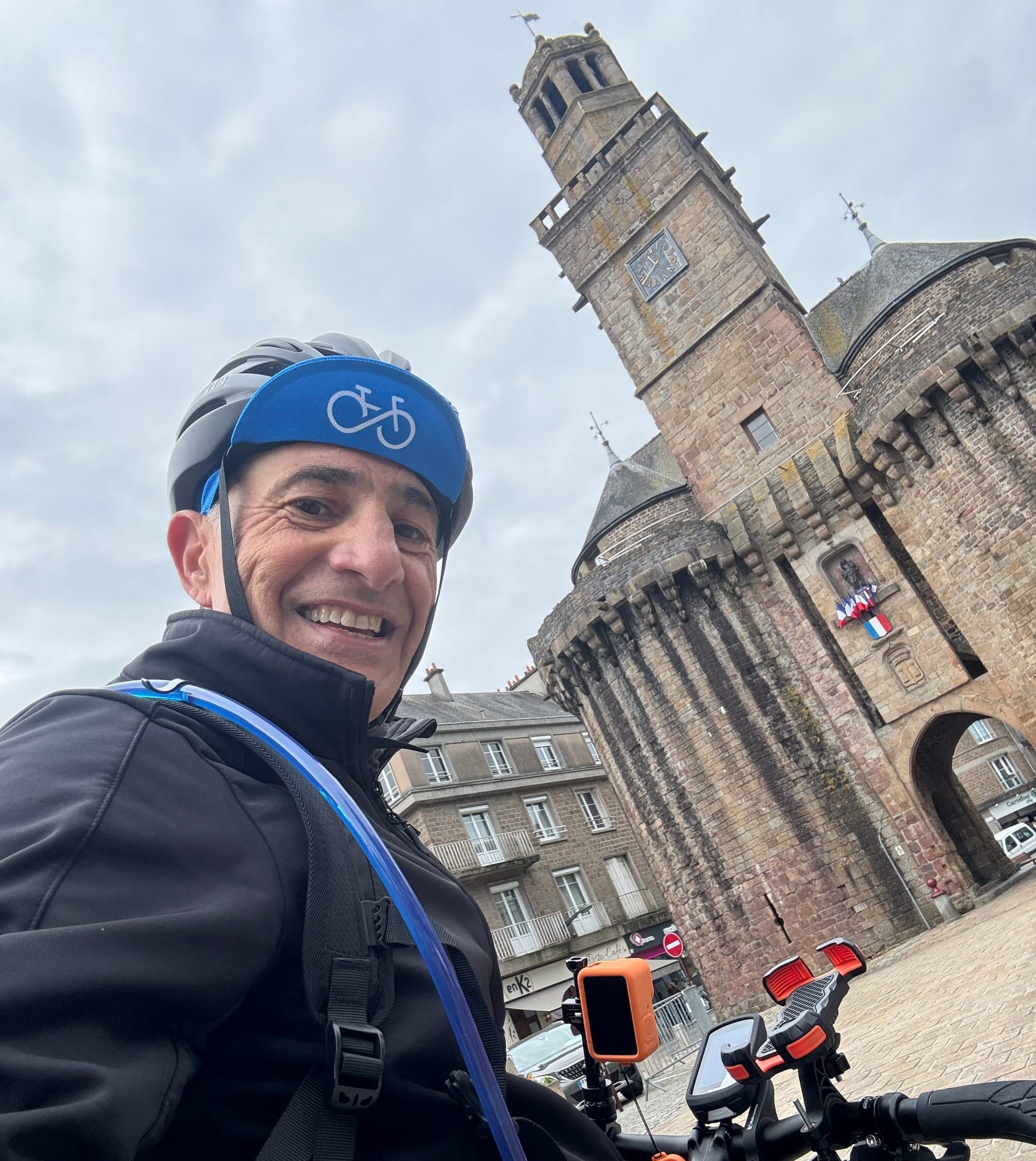
The comment I kept hearing during my 3,200-kilometre Tour de Gaule was:
“You’re courageous.”
Maybe.
But I’m not sure courage is the right word.
These WTFT challenges are driven as much by fear as by courage.
Fear of not being able to function at my potential in my 80s.
Fear of becoming a burden on my children.
Fear of slowly giving up the expansion that keeps life interesting.
I don’t know whether walking across Europe or cycling around France will pay off. Nobody does.
But I believe they improve the odds.
The odds of staying mobile.
The odds of remaining resilient.
The odds of staying curious.
The odds of keeping more options later in life.
The assumption worth questioning
Most people invest consciously in their future selves through their careers, savings and retirement plans.
Much less consciously through mobility, habits, resilience, capability or curiosity.
And yet those things compound too.
We prepare financially for the life we hope to live later without always considering who we are becoming in the meantime.
The perspective shift
You are not only financing your future.
You are building the person who will have to live it.
Your future capability may be the most important retirement asset you build.
Money may determine what you can afford to do.
Your health, mobility, resilience and curiosity will influence what you are still capable of doing.
Look again
Walking 6,000 kilometres and cycling around France do not guarantee that I will remain healthy or independent at 80.
Illness, ageing and bad luck do not disappear because we exercise.
This is not about guarantees.
It is about probabilities.
Could I spend these years choosing more comfort?
Of course.
But comfort is not neutral.
It is also a choice about the person I may become and the options I may retain.
It simply feels less like a decision because its costs arrive later.
What could this change for you?
Think about the retirement you are preparing to finance.
What do you hope to do with it?
And are your current choices building the person who will still be capable of living that life?
A well-funded retirement can still become a restricted life if the person arriving there has lost the health, confidence or curiosity to use it.
A note from the road
The cost of the Tour de Gaule was immediate.
Fatigue, discomfort, effort and inconvenience arrived every day.
The possible return may not become visible for years.
I was not only cycling for the person I was at 66.
I was investing in the person I hope to be at 80.
Walk your talk,
Franck
P.S.:
- Beyond money, what are you investing in for your future self? Reply and tell me. I read every response.
- If someone else needs this perspective, forward it to them. They can join WTFT here.
- WTFT is free for everyone. If you would like to support the experiments behind it, you can buy me a coffee.
New possibilities delivered to your mail
Free. Only when I have something worthy to share. Unsubscribe anytime.

Member discussion