Why can I walk 6,000 km but still lose to bread?
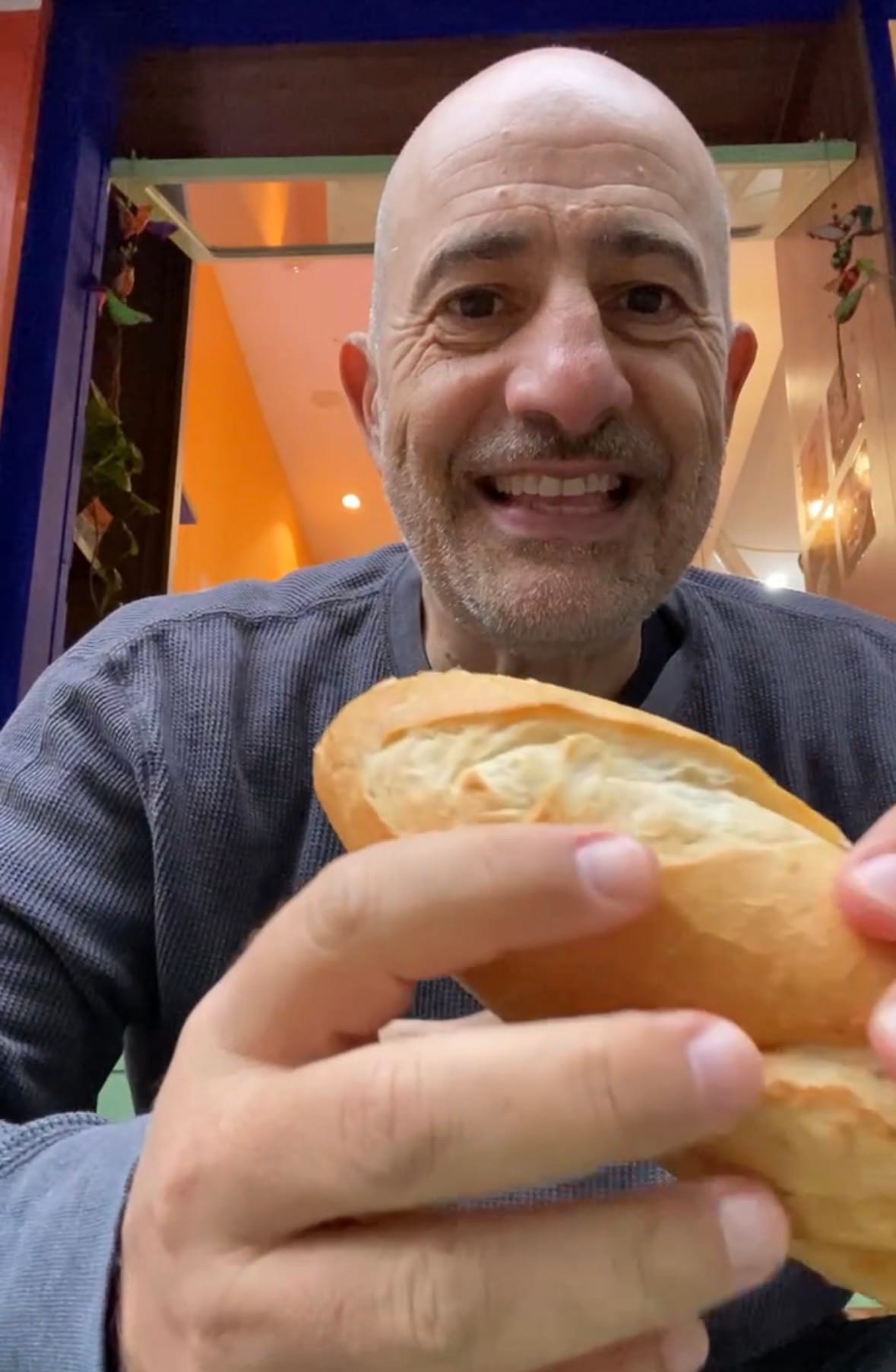
I have at least two weaknesses that affect my health:
I don’t like exercising.
And I like bread—a lot.
Every morning starts with the same two questions:
Do I exercise today?
Do I eat bread today?
They sound trivial.
They aren’t.
These are genuinely among the first negotiations I have with myself every day.
And trust me, I know every reasonable excuse for giving in. I have been refining them for years.
What makes this strange is that I walked 6,000 kilometres across Europe.
For 11 months, I got up and walked again through pain, bad weather, fatigue and days when I would have preferred to stop.
Apparently, I can be disciplined enough to cross a continent.
Yet put fresh bread in front of me and that discipline can disappear before breakfast.
The assumption worth questioning
We tend to think of discipline as something we either possess or lack.
A disciplined person exercises, eats well and follows through.
An undisciplined person gives in.
But the same person can show extraordinary persistence in one part of life and struggle with an apparently minor choice in another.
Perhaps that is because the two situations are not asking the same thing of us.
During the walk, the objective was clear. The commitment had already been made. Progress was visible, and the next action was rarely in doubt.
I did not wake up every morning and reopen the entire decision. I walked.
At home, the decision resets every day.
Do I exercise?
Do I eat the bread?
Maybe today is different.
Maybe I deserve an exception.
Maybe I can start again tomorrow.
The action is smaller but the negotiation never ends.
The Perspective Shift
The problem may not be that you lack discipline. It may be that you keep asking discipline to win the same argument every day.
A demanding objective can be easier to follow than a modest intention when one has a structure and the other remains permanently open to negotiation.
The bread is not my only problem.
The repeated decision is.
Every time I ask myself again, the immediate reward gets another opportunity to defeat an objective whose benefit remains distant.
This pattern extends far beyond food and exercise.
We keep reopening decisions about sleep, spending, difficult conversations, personal projects and changes we know we want to make.
The excuses work because they are rarely absurd.
They are reasonable enough to justify waiting one more day.
Look again
This does not mean that every decision should become an inflexible rule.
Bodies change. Circumstances matter. New information can justify a different choice.
But there is a difference between adapting consciously, and repeatedly renegotiating an intention at the exact moment temptation is strongest.
If you keep failing to follow through, your conclusion may be:
I need more willpower.
A better question might be:
Why am I leaving this decision open every day?
A note from the road
On the road, the route gave the day a direction. The commitment had already removed much of the debate.
At home, nothing forces the decision. I can reopen it every morning.
Nothing dramatic happens if I eat the bread.
That freedom should make the choice easier.
Sometimes it makes it harder.
Perhaps the real challenge is not strengthening our willpower indefinitely. It is learning when to stop asking it the same question.
Walk your talk,
Franck
P.S.:
- What apparently small negotiation do you keep having with yourself? Reply and tell me. I read every response.
- If someone else needs this perspective, forward it to them. They can join WTFT here.
- WTFT is free for everyone. If you would like to support the experiments behind it, you can buy me a coffee.
New possibilities delivered to your mail
Free. Only when I have something worthy to share. Unsubscribe anytime.

Member discussion